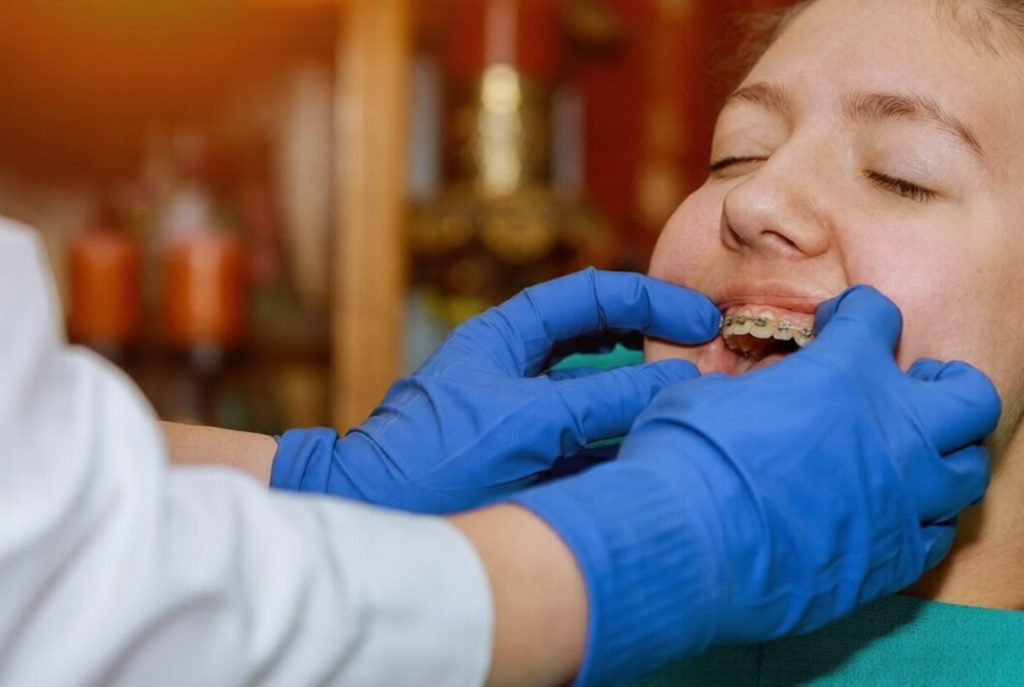
Private health funds can contribute to braces in Perth—but only if your policy includes orthodontic cover, you’ve completed the 12-month waiting period, and haven’t reached your fund’s benefit cap. Orthodontic benefits from private health funds range from a few hundred dollars to over $2,500, depending on your fund and level of cover. Medicare does not cover braces.
Summary of the Content:
- Medicare does not cover braces for many patients—you need private health fund cover with orthodontic benefits included.
- Standard waiting periods for orthodontics are 12 months, so plan ahead before treatment starts.
- Many health funds cap orthodontic benefits at $1,000 to $2,500 per person over your membership.
- Braces are claimed under item number 881, while clear aligners use item number 825.
- In Perth, HBF is a common choice and offers orthodontic cover with a 12-month waiting period and benefit caps that vary by policy tier.
- Treatment costs range from $3,000 to $9,000+, so even maximum fund benefits leave a significant out-of-pocket gap.
Do Private Health Funds Actually Cover Braces?
Yes—private health funds can cover braces, but only if your policy specifically includes orthodontic treatment. Not all include orthodontics; many basic and mid-tier policies exclude it entirely. Medicare does not cover braces for the general population. Orthodontic benefits from private health funds range from a few hundred dollars to over $2,500, depending on your fund and level of cover.
How Dental Cover Works
Private health dental cover is divided into three categories: general dental (check-ups, cleans, fillings), major dental (crowns, root canal therapy, bridges), and orthodontics (braces and aligners). Orthodontics is often an optional add-on or only included in higher-tier policies. You cannot assume your policy includes orthodontic cover simply because it includes dental benefits—check your policy schedule or contact your fund directly.
Why Medicare Doesn’t Cover Braces
Medicare covers essential medical and hospital care, but excludes orthodontic procedures provided in private dental clinics. The only exception is children with cleft lip, cleft palate, or craniofacial conditions who may access publicly funded hospital programs.
What ‘Orthodontics Included’ Actually Means
“Orthodontics included” means your fund contributes a set amount—not that procedures are free. Your policy shows an annual limit or total benefit cap (e.g., $800 per year, capped at $2,000 total). Orthodontic procedures generally cost $3,000 to $9,000 or more, so many patients have significant out-of-pocket costs.
What to Check With Your Fund Before Treatment Starts
Before committing to braces, there are five key things to confirm with your health fund: whether orthodontics is included in your policy, whether you’ve served the waiting period, and how much of your benefit cap remains. You should also check what the annual sub-limits are and which item numbers are covered. Call your fund and ask specifically about orthodontic cover.
5 Things to Check With Your Fund
- Is orthodontics explicitly listed on your policy?
Don’t assume orthodontics is included just because you have dental cover. Ask: “Does my current policy include orthodontic benefits?” Major dental cover and orthodontic cover are separate categories. - Have you served the waiting period?
Standard waiting periods for orthodontics are 12 months. Ask: “When does my orthodontic waiting period end?” If you joined your fund or upgraded to orthodontic cover less than 12 months ago, you may still be serving the wait. - How much of your benefit cap remains?
Many funds cap orthodontic benefits at $1,000 to $2,500 per person. Ask: “How much of my orthodontic benefit cap have I already used, and how much remains?” Previous claims reduce your remaining entitlement. - What are the annual sub-limits?
Some funds limit how much you can claim per calendar year, even if your total benefit cap is higher. Ask: “Is there an annual sub-limit on orthodontic claims, or can I claim the full amount in one year?” - Which item numbers are covered?
Orthodontic procedures are claimed under specific item numbers. The two main codes are:- Item 881:
This includes traditional braces (metal or ceramic brackets). - Item 825:
This includes aligner treatment (e.g., Invisalign, ClearCorrect).
- Item 881:
- Is orthodontics explicitly listed on your policy?
Ask: “Does my policy cover item 881 and item 825?” Some funds cover both. Some cover only one. Some policies exclude aligners entirely, even if braces are covered.
Treatment can start before the waiting period ends, but fund benefits are only payable for services provided after the waiting period is complete. Check with your dentist about payment schedules that align with your waiting period end date.
Does Upgrading Your Cover Restart the Waiting Period?
Yes, upgrading to a higher cover tier that includes orthodontics usually restarts the 12-month waiting period. If you’re transferring between funds at the same level of cover, waiting periods may transfer. Ask your new fund: “Will my previous waiting period be recognised if I transfer?”
How Much Will Your Health Fund Actually Pay?
Orthodontic benefits vary widely between funds, from a few hundred dollars to over $2,500. Many funds set a benefit cap per person, usually between $1,000 and $2,500. Annual sub-limits mean benefits are usually paid across the treatment period, not as a single lump sum. Your out-of-pocket cost depends on your fund, policy tier, and treatment type.
What to Expect From Your Health Fund — At a Glance
| Category | What This Means |
| Waiting Period | 12 months (standard for orthodontics) |
| Benefit Cap Range | $1,000–$2,500 per person |
| Annual Sub-Limit (typical) | $500–$1,000 per calendar year |
| Benefit Method | Fixed schedule per item OR percentage of invoice |
| When Limits Reset | Resets 1 January annually; benefit caps — no reset |
Benefit Cap Explained
A benefit cap is the total amount you can claim for orthodontic procedures over your membership. This cap follows you when you switch funds—it does not reset. Once you reach the cap, no further benefits are payable, even if you change to a higher level of cover or switch to a new fund.
Annual limits are the maximum amount you can claim per calendar year. Annual limits usually reset on 1 January each calendar year. If you don’t use your full annual entitlement in one year, it does not roll over.
Perth Context: HBF Orthodontic Benefits
HBF offers orthodontic cover across a range of policy tiers, with a 12-month waiting period and a lifetime limit of $2,500. Cover inclusions vary by tier — confirm with HBF directly whether your current policy includes orthodontic benefits.
Please note: The figures above reflect publicly available information and are indicative only. Benefit caps, annual limits, and policy inclusions vary by policy tier and may change. Always confirm your specific entitlements directly with your fund before starting procedures. Ashburton Dental Centre does not represent HBF and cannot confirm the ongoing accuracy of fund-specific figures.
Typical Braces Cost in Perth
Orthodontic procedures in Perth vary in cost depending on the type of braces and the complexity of your case. According to ADA data:
- Ceramic braces usually range from $5,000 to $8,500 for standard 18-month treatment.
- Traditional metal braces can cost up to $8,000, depending on individual circumstances.
- Lingual braces start at $7,500 for a single arch or $12,500 for full treatment.
- Clear aligner treatment ranges from $2,000 to $9,000, depending on the type and individual circumstances.
Out-of-pocket example: If your procedures cost $7,000 and your fund pays $2,000 (the maximum benefit cap), your out-of-pocket cost is $5,000. Even with maximum fund benefits, many patients pay a significant portion of the total cost.
Staged Payments and How Claims Are Processed
Orthodontic procedures generally span 12 to 24 months or longer. Fund benefits are not paid as a lump sum upfront. Instead, claims are processed across the duration of your care, based on invoices or milestones.
How it works:
- Your provider invoices you at key stages such as initial fitting, quarterly adjustments, and retainer fitting.
- You submit claims after each invoice, and your fund pays benefits up to your annual limit each calendar year.
- Once your annual limit is reached, no further benefits are payable until the next calendar year or until your benefit cap is exhausted
.
This staged approach means you claim gradually over the course of your care, not all at once.
HICAPS: On-the-Spot Claiming
Many dental clinics in Perth use HICAPS terminals for on-the-spot health fund claiming. HICAPS allows you to swipe your health fund card at the clinic, submit your claim instantly, and pay only the gap amount.
Important note: Not all health funds allow HICAPS claiming for orthodontic item numbers. Some funds require you to submit claims manually or pay upfront and wait for reimbursement. Check with your clinic and fund to confirm HICAPS availability.
Does Private Health Fund Cover Invisalign and Clear Aligners Too?
Perth patients can reduce out-of-pocket costs by planning cover start dates at least 12 months before procedures begin, timing invoices across two calendar years to claim across two annual limits, and confirming their remaining benefit cap before switching funds. Here are five practical strategies you can use:
- Planning ahead—taking out or upgrading orthodontic cover at least 12 months before your first appointment
The standard waiting period for orthodontic cover is 12 months. If you anticipate needing braces in 2027, join a fund with orthodontic cover by early 2026. By the time you’re ready to start procedures in 2027, your waiting period will be complete, and you can begin claiming immediately. Waiting until you’re ready to start procedures means you’ll pay full out-of-pocket costs for the first 12 months of care.
- Timing invoices across two calendar years to claim across two annual limit periods
Many health funds reset annual limits on 1 January each year. If your fund has an annual sub-limit (e.g., $800 per year), you can maximise your total claim by timing invoices across two calendar years. For example, arrange your first invoice in December and claim $800, then arrange your second invoice in January and claim another $800. Speak with your provider about invoice timing—some clinics can structure payment milestones to align with calendar year resets.
- Knowing your remaining benefit cap before switching funds—it travels with you and does not reset
Your orthodontic benefit cap follows you when you switch health funds. Before switching, call your current fund and ask: “How much of my orthodontic benefit cap have I already used?” This allows you to calculate your remaining entitlement with any new fund you join. Do not assume switching to a fund with a higher cap gives you access to more benefits if you’ve already been claiming elsewhere.
- Asking for itemised invoices with item numbers clearly listed
When submitting claims to your health fund, you need an itemised invoice that includes the item number (881 for braces, 825 for aligners), the provider’s name and AHPRA registration number, the date of service, and the fee charged. Some funds reject claims that do not include item numbers or sufficient detail.
- Using payment plans alongside health fund claims to manage out-of-pocket costs
Even with maximum health fund benefits, many patients have a significant out-of-pocket cost. Ashburton Dental Centre offers a range of payment options to help manage out-of-pocket costs, including third-party financing through Afterpay, humm, and Zip. These are external financial products offered by independent providers — eligibility criteria, fees, and terms and conditions are set by each provider and apply.
Patients should confirm terms directly with the relevant provider before proceeding. Contact Ashburton Dental Centre for details on which options are available at our clinic.
What This Looks Like in Practice
Example: A patient joins a health fund with orthodontic cover in March 2025 (12-month waiting period begins). The waiting period ends in March 2026, and the patient books the first appointment. In December 2026, the patient claims $800 from the annual limit. In January 2027, the annual limit resets, and the patient claims another $800. In June 2027, the patient claims the remaining $400 benefit cap and uses Zip to spread the remaining out-of-pocket costs across manageable instalments.
Ashburton Dental Centre cannot confirm your health fund entitlements on your behalf, negotiate benefit amounts with your health fund, or confirm that your fund will approve claims. You must contact your fund directly to verify your cover, waiting period status, benefit cap, and annual limits. The clinic can provide itemised invoices and process HICAPS claims where available.
Frequently Asked Questions
Here are answers to some common questions about private health fund cover for braces in Perth.
Does Medicare cover braces in Australia?
No, Medicare does not cover braces, Invisalign, or other orthodontic procedures for the general population. Orthodontic care provided in private dental clinics is not included in Medicare benefits. Patients need private health fund dental cover or payment plans to manage orthodontic costs.
The only exceptions are:
- Children with cleft lip, cleft palate, or craniofacial conditions may be eligible for publicly funded orthodontic care through hospital-based programs. This is arranged through hospital referral, not through private dental clinics.
- The Child Dental Benefits Schedule (CDBS) is a government program that provides up to $1,182 over two calendar years for general dental care for children aged 0–17. However, the CDBS explicitly excludes orthodontic procedures, including braces and aligners.
For everyone else, orthodontic procedures are considered private dental expenses. You need:
- Private health fund cover that includes orthodontics (subject to waiting periods and benefit caps), OR
- Out-of-pocket payment, which can be managed through payment plans such as Afterpay, humm, or Zip
Eligibility criteria, terms, and conditions apply — contact the clinic for details.
Medicare does not contribute to orthodontic costs at private dental clinics, regardless of clinical need or age.
How long is the waiting period for braces on private health fund?
Many health funds impose a 12-month waiting period for orthodontic procedures—this is standard across the industry. The waiting period starts when you join a fund or upgrade your dental cover to a tier that includes orthodontics. If you’re planning to start braces in the next year, check your current cover tier now.’
How waiting periods work:
- New members serve a 12-month waiting period from their membership start date.
- Upgrading to a policy that includes orthodontics restarts the 12-month waiting period.
- Transferring between funds at the same cover level may allow your waiting period to transfer. Confirm this with your new fund before switching.
Practical tip: If you need braces in 2026, join or upgrade to orthodontic cover by early 2025 so your waiting period is complete when you’re ready to start.
Can you start treatment during the waiting period? Yes, but you cannot claim fund benefits for services provided before the waiting period ends. Some patients begin procedures and delay invoicing until after the wait is complete.
Confirm your waiting period end date with your fund before booking your first appointment.
What is a lifetime limit for orthodontics, and can I reset it?
A lifetime limit (also called a benefit cap) is the maximum total orthodontic benefit payable per person over their membership—usually $1,000 to $2,500, though some policies may provide higher benefits. Lifetime limits are tracked across all funds. Once you reach the cap, no further orthodontic benefits are payable, even if you switch funds or upgrade your cover.
How benefit caps work:
- When you switch funds, your claims history with your previous fund will be used to calculate your remaining entitlement. You may need to request a statement of orthodontic claims from your current fund before switching.
- The cap follows you between funds—it does not reset when you switch or upgrade.
- Both braces (item 881) and aligners (item 825) draw from the same benefit cap.
Example: You claim $1,500 with Fund A. You switch to Fund B (which has a $2,500 cap). Fund B deducts your $1,500 in previous claims. Your remaining entitlement is $1,000.
Before you start treatment:
Call your fund and ask: “How much of my orthodontic benefit cap have I already used, and how much remains?” This is critical if you’ve previously claimed orthodontic benefits or switched funds. Knowing your remaining entitlement helps you plan for accurate out-of-pocket costs.
Can adults get orthodontic cover from private health funds?
Yes, private health fund orthodontic cover has no age restriction. Adults with cover that includes orthodontics can claim benefits under the same conditions as children, subject to the same 12-month waiting periods and benefit caps. Whether you’re 15 or 55, the rules are the same.
Key points for adult orthodontic claims:
- Private health funds do not impose age limits on orthodontic benefits. If your policy includes orthodontics and you’ve served the waiting period, you can claim regardless of your age.
- Adults serve the same 12-month waiting period and have the same benefit caps as children. Age does not affect the amount you can claim.
- Adults claim under the same item numbers as children. Item 881 applies to braces, and item 825 applies to aligners.
The CDBS does not help adults (or children with braces):
The Child Dental Benefits Schedule (CDBS) provides up to $1,158 over two calendar years for general dental care for children aged 0–17. However, the CDBS does not cover orthodontic procedures at all, even for children.
For orthodontic procedures, private health fund cover is the only benefit option for many patients, regardless of age.
What item numbers should I give my health fund when confirming cover?
Quote item number 881 for traditional braces and item number 825 for clear aligner treatment, such as Invisalign, when calling your health fund. These are the two main item codes used for orthodontic claims. Ask your fund to confirm the benefit payable for each item, your remaining benefit cap, and whether your waiting period has been served.
What to ask your fund:
- “Does my policy cover item 881 (traditional braces) and item 825 (clear aligners), and what are the benefit amounts for each?” Some policies cover both; some cover only one; some exclude orthodontics entirely.
- “How much of my benefit cap have I already used, and how much remains?” This tells you exactly how much your fund will contribute towards your care.
- “When does my orthodontic waiting period end?” You need to know whether you’ve served the full 12-month wait.
- “Is there an annual sub-limit on orthodontic claims?” Some funds limit how much you can claim per calendar year.
Item 881 vs. Item 825:
Item 881 covers fixed appliance treatment, including traditional metal or ceramic braces. Item 825 covers removable appliance treatment, including clear aligner systems such as Invisalign.
Your dental provider can prepare a written treatment plan with item numbers to help you confirm exact benefits with your fund.
Final Thoughts
Private health funds can meaningfully reduce the cost of braces in Perth, but the amount you receive depends on your policy tier, whether you’ve served the waiting period, and how much of your benefit cap remains. These three factors determine your actual out-of-pocket cost. Checking your orthodontic cover before you start treatment can help reduce the risk of unexpected expenses and support more accurate budget planning. Don’t assume your policy includes orthodontics—confirm it directly with your fund.
The practical next step is to call your health fund with item numbers 881 (braces) or 825 (aligners) before your first appointment. Ask about your benefit entitlement, remaining benefit cap, and waiting period status to understand your out-of-pocket costs. Ashburton Dental Centre accepts a wide range of health funds and can provide itemised invoices with item numbers to support your claim. Third-party payment options, including Afterpay, humm, and Zip, are also available — eligibility criteria, fees, and terms are set by each provider and apply independently.
If you’re considering braces or Invisalign in Perth, book a consultation with Ashburton Dental Centre in Gosnells. Our team can assess your individual circumstances, discuss treatment options that may suit your needs, and provide a written treatment plan with item numbers to help you confirm your health fund benefits. We’re here to answer your questions about procedures, timelines, and financing options. Contact us to arrange an appointment and find out what approach may work for your situation.
Author Name: Dr Kav Bhinder, General Dentist
AHPRA Registration: DEN0002129902
Dr Kav Bhinder is a general dentist at Ashburton Dental Centre, holding general registration with the Dental Board of Australia (AHPRA Registration: DEN0002129902). He completed his Bachelor of Dental Surgery at Baba Farid University of Health Sciences in 2013 and holds a Master’s degree from Curtin University. Dr Bhinder has a special interest in orthodontic treatment options, including braces and Invisalign, and consults with patients across the Gosnells area.