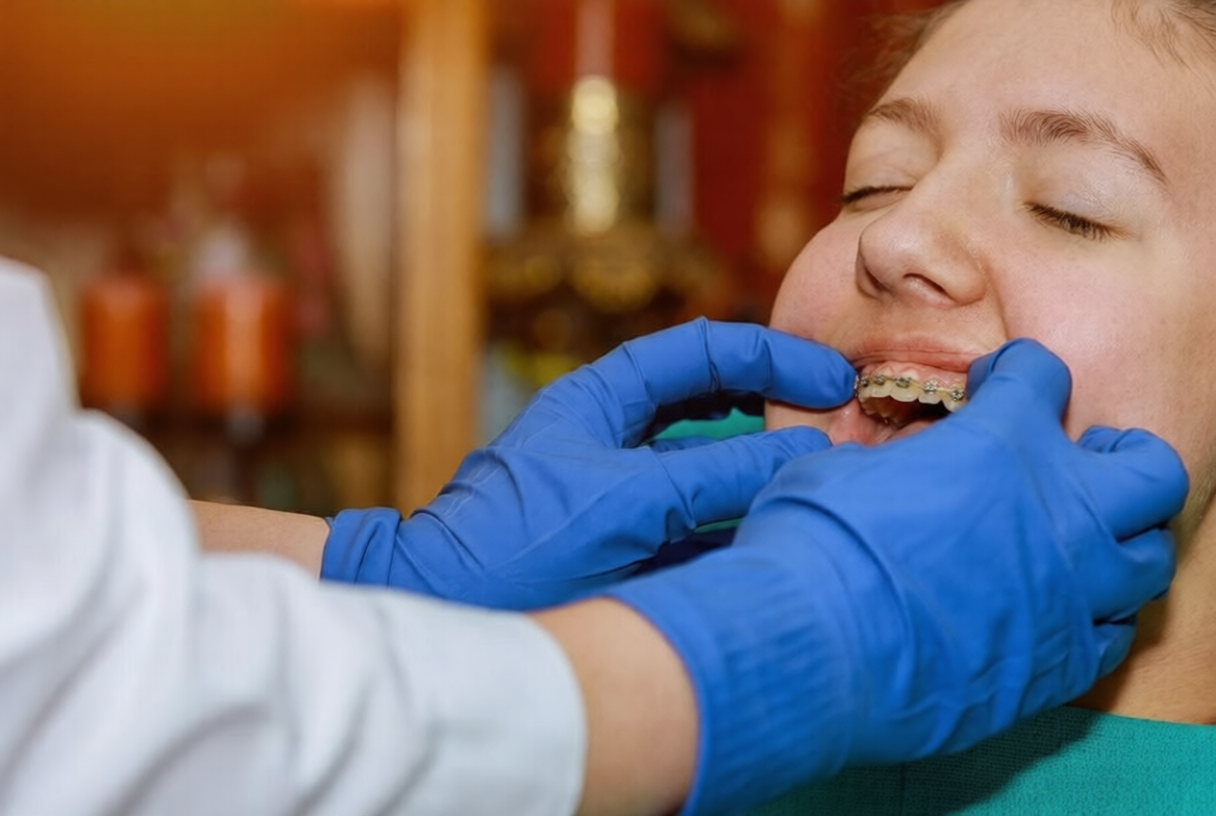
Summary of the Content:
- The Australian Society of Orthodontists recommends a first orthodontic assessment by age 7. Many children don’t begin comprehensive braces until ages 10–14.
- An early assessment doesn’t mean immediate treatment. It establishes a baseline and identifies issues that may benefit from monitoring or early intervention.
- Warning signs include crowding, crossbite, underbite, mouth breathing, thumb sucking past age five, and early or delayed baby tooth loss. Parents can spot many of these signs at home.
- Phase 1 (early) treatment usually occurs between ages 7 and 10 and lasts 9–12 months. It uses targeted appliances to guide jaw growth while bones are still developing.
- No referral is needed to book a child’s braces assessment. Parents can contact a dental clinic directly.
Ashburton Dental Centre in Gosnells provides children’s orthodontic assessments with Dr Kav Bhinder.
What Is the Right Age for a Child's First Orthodontic Assessment?
The Australian Society of Orthodontists recommends that children have their first orthodontic assessment by age 7. Many children begin comprehensive braces between the ages of 10 and 14. An assessment at age 7 does not mean braces will start immediately—it establishes whether teeth and jaw are developing normally and identifies any issues that may benefit from early monitoring.
Why Age 7 Is Recommended
By age 7, children have a mix of baby and adult teeth. This allows dentists to assess how adult teeth are coming through. Jawbones are still pliable at this age. Early detection of alignment or growth issues can make later treatment simpler.
Assessment Age vs. Treatment Age
Assessment and treatment are not the same. Many children don’t begin comprehensive braces until ages 10–14. Girls typically start orthodontic treatment earlier (ages 10–13) than boys (ages 12–14) due to differences in growth patterns. This timing allows treatment to work with natural jaw development.
When to Seek an Assessment Sooner
Age 7 is a guideline, not a rule. Parents can and should book an assessment sooner if they notice crowding, bite issues, or other concerns. Many early problems are unlikely to improve without assessment or intervention. Waiting until age 7 is not necessary if a visible issue is present.
No Referral Required
Parents can book a dental assessment directly. A referral from a GP or school nurse is not needed. Ashburton Dental Centre in Gosnells provides children’s orthodontic assessments with Dr Kav Bhinder, a general dentist who offers orthodontic consultations.
Warning Signs a Dental Assessment May Be Helpful for Your Child
Parents can watch for three types of warning signs: visible issues in teeth and bite alignment, oral habits that affect jaw development, and unusual timing of baby tooth loss. Noticing one or more of these signs doesn’t confirm braces are needed—it simply suggests a professional assessment may be beneficial to check whether teeth and jaw are developing as expected.
Signs in Your Child’s Teeth and Bite
These are visible, structural signs you may notice when your child smiles, talks, or eats:
- Crowded or overlapping teeth:
These are particularly noticeable in the front teeth from age 7–8. Crowding can indicate there isn’t enough space for adult teeth to come through straight. - Visible crossbite:
This occurs when upper teeth sit inside lower teeth on one or both sides when the mouth is closed. This can affect jaw growth if not monitored. - Overbite:
This is when upper front teeth cover too much of the lower front teeth when biting down. Significant overbite can affect chewing and increase wear on teeth. - Underbite:
This occurs when the lower teeth protrude in front of the upper teeth when the mouth is closed. This can become more pronounced as the jaw grows. - Protruding upper front teeth:
Front teeth that stick out noticeably increase the risk of injury during sport or play. Early assessment can identify options to reduce this risk.
- Crowded or overlapping teeth:
Visible gaps or spacing between adult teeth:
While some gaps close naturally as more teeth come through, persistent spacing may be worth assessing. Gaps that don’t close naturally by age 9–10 may benefit from monitoring.
Habits and Behaviours That Can Affect Development
These functional and behavioural signs are less visible but can influence how teeth and jaw develop:
- Mouth breathing:
This is particularly noticeable during sleep or when resting quietly. Persistent mouth breathing can indicate narrow airways or jaw development issues. - Thumb sucking or dummy use continuing past age 4–5:
Prolonged sucking habits can push teeth out of alignment. The earlier the habit ends, the greater the chance that teeth may realign naturally over time. - Tongue thrusting:
This involves pushing the tongue against or between teeth when swallowing. This habit can push the front teeth forward over time. - Difficulty chewing or biting food:
Struggling to bite through certain foods may indicate bite misalignment. Children may avoid harder foods without mentioning discomfort. - Jaw clicking, popping, or shifting to one side when opening:
Unusual jaw movement or sounds can indicate joint or alignment issues. Early assessment can identify whether monitoring is needed. - Speech impediments:
These include a persistent lisp or difficulty with certain sounds (such as ‘s’, ‘th’, or ‘t’). Some speech issues are linked to tooth or jaw positioning.
Timing of Baby Tooth Loss
Baby tooth timing is easily observable but often overlooked as a warning sign:
- Early baby tooth loss:
This occurs when baby teeth are lost before age 5–6 due to decay or injury. Neighbouring teeth may drift into the gap, blocking the path for adult teeth. - Delayed baby tooth loss:
This happens when baby teeth remain well past the expected age for falling out. Adult teeth may erupt in the wrong position if baby teeth don’t clear the path on time. - Teeth erupting in the wrong position:
This occurs when adult teeth come through crooked or out of place, even when baby teeth are still present. This often indicates crowding or space issues.
Seeing one or more of these signs doesn’t mean your child will definitely need braces. Many issues improve naturally as the jaw grows and more adult teeth come through. An assessment provides clarity on whether monitoring, early intervention, or no action is recommended based on your child’s individual development.
What Happens at a Child's First Orthodontic Assessment?
A child’s first orthodontic assessment involves a visual examination of teeth and jaw alignment, dental X-rays to check developing teeth beneath the gum line, and a discussion of habits that may affect growth. The appointment is non-invasive and low-pressure—there is no drilling, no needles, and no obligation to proceed with treatment. Ashburton Dental Centre provides children’s orthodontic assessments in Gosnells.
How the Assessment Is Carried Out
The dentist will explain each step to both parent and child in plain language. Here’s what usually happens:
- Visual examination:
The dentist examines existing teeth, jaw alignment, and bite. They check how the upper and lower teeth meet when your child closes their mouth. They also assess whether there is enough space for adult teeth coming through. - Dental X-rays:
A panoramic X-ray (OPG) may be taken to show teeth not yet visible above the gum line. This reveals unerupted teeth, impacted teeth, and whether adult teeth appear to be developing as expected. The X-ray helps identify potential crowding or spacing issues before they become visible. - Jaw growth and facial symmetry:
The dentist assesses whether the jaw is growing symmetrically and in proportion to facial development. This can identify growth patterns that may benefit from early guidance. - Discussion of oral habits:
If relevant, the dentist may ask about thumb sucking, dummy use, mouth breathing, or tongue thrusting. These habits can affect tooth and jaw development, and addressing them early can improve natural alignment. - Moulds or digital scans:
In some cases, moulds or digital scans of the teeth may be taken for a more detailed view. This is painless and takes only a few minutes.
What Outcomes Can Parents Expect?
There are generally three outcomes from a first orthodontic assessment:
- Outcome 1 – Normal development—no action needed:
Teeth and jaw are developing as expected. Your child continues with routine dental check-ups as usual. No monitoring or treatment is required at this stage. - Outcome 2 – Developing issue identified—monitoring recommended:
An issue is present but doesn’t require immediate treatment. The dentist may recommend monitoring appointments every 6–12 months to track development. A treatment plan can be discussed when the timing is appropriate, usually closer to the early teen years. - Outcome 3 – Early intervention recommended:
Early treatment (Phase 1) may be beneficial to guide jaw growth or address a specific issue now. The dentist will discuss what the treatment involves, how long it may take, and when it will begin. Parents receive a clear outline of options and costs before making any decision.
Many children do not require immediate treatment after a first assessment. The appointment provides information and a baseline for monitoring, not a commitment to braces.
Disclaimer: A dental assessment provides a clinical evaluation of your child’s teeth and jaw development and is the recommended pathway to determine whether any action is appropriate.
What Is Early (Phase 1) Orthodontic Treatment?
Phase 1 orthodontic treatment usually occurs between ages 7 and 10 and lasts 9–12 months. It uses targeted appliances to guide jaw and tooth position during development. Phase 1 is not full braces—it addresses specific issues early to simplify or reduce later treatment. Not every child needs Phase 1; it is recommended when waiting would worsen the problem.
What Phase 1 Treatment May Involve
Phase 1 treatment uses a range of appliances depending on the issue being addressed:
- Removable plates:
These are used to guide tooth and jaw position and can be taken out for eating and cleaning. - Palatal expanders:
These widen the upper jaw to create space for incoming teeth and are highly effective while the palate is still growing. - Space maintainers:
These hold space open after early loss of baby teeth, preventing neighbouring teeth from drifting into the gap. - Functional appliances:
These address underbites or overbites that involve jaw growth patterns, guiding the jaw into a more balanced position. - Partial braces:
These are applied to specific teeth only, not a full set, to address particular alignment issues. - Anti-habit appliances:
These help address thumb-sucking or tongue-thrusting habits that affect tooth and jaw development. - Invisalign First:
This is a clear aligner option available for some children aged 6–10, though suitability depends on the specific issue being addressed.
Will My Child Still Need Braces After Phase 1?
Phase 1 does not always prevent the need for full braces later, but it can shorten or simplify that treatment. Phase 2 generally begins when many adult teeth have erupted, usually in the early teen years. Phase 2 involves comprehensive orthodontic treatment addressing remaining alignment issues. Phase 1 may reduce Phase 2 duration or complexity, or—in some cases—eliminate the need for it. Not every child who has Phase 1 will require Phase 2.
The typical pathway is: Phase 1 treatment → monitoring period (usually 12–24 months) → assessment for Phase 2 if needed. During the monitoring period, the dentist tracks jaw growth and tooth eruption to determine the appropriate timing for any further treatment.
Frequently Asked Questions
Here are answers to some common questions Perth parents ask about child braces and early orthodontic assessment.
Does my child need a referral to see a dentist about braces?
No, parents can book a dental assessment directly without a referral from a GP or school nurse. A general dentist can carry out an initial orthodontic assessment to evaluate teeth and jaw development. If your child needs more complex treatment, your dentist may arrange a referral to a more experienced practitioner, but this is determined after the initial assessment.
Parents in Gosnells can contact Ashburton Dental Centre directly to book a children’s orthodontic assessment with Dr Kav Bhinder. You do not need to wait for a school dental screening or GP recommendation—if you notice any warning signs or have concerns about your child’s teeth, you can arrange an appointment at any time.
What is the difference between Phase 1 and Phase 2 orthodontic treatment?
Phase 1 is early interceptive treatment targeting jaw growth and specific developmental issues in children aged 7–10, often lasting 9–12 months. Phase 2 is comprehensive braces or aligner treatment that begins in the early teen years when many adult teeth have erupted. The two phases address different stages of dental development.
Key differences:
- Phase 1 focus:
Phase 1 guides jaw growth, creates space for incoming teeth, addresses habits, and addresses bite issues that may worsen without early care. It uses targeted appliances like palatal expanders, removable plates, or partial braces. - Phase 2 focus:
Phase 2 straightens all adult teeth, refines bite alignment, and addresses remaining cosmetic and functional concerns. It usually involves full braces or clear aligners.
Phase 1 may reduce the duration or complexity of Phase 2, or—in some cases—eliminate the need for it. However, not every child requires Phase 1. Suitability is determined through an orthodontic assessment based on your child’s individual development and needs.
My child’s teeth look straight — could they still need an assessment?
Yes, some orthodontic concerns are not visible to the naked eye and can only be identified through an X-ray or clinical examination. Straight-looking teeth don’t always indicate healthy jaw development or proper tooth positioning beneath the gum line. An assessment checks for issues that may not yet be apparent when your child smiles or talks.
Issues that may not be visible include the following:
- Unerupted or impacted teeth:
Adult teeth may be blocked or growing in the wrong direction beneath the gum, even though baby teeth appear normal above. - Narrow jaw development:
The upper jaw may be developing too narrow to accommodate incoming adult teeth, which can lead to crowding later. - Developing crossbite:
A crossbite may not be noticeable when the mouth is closed, but can be identified during a clinical examination. - Spacing issues:
Crowding may develop as larger adult teeth erupt, even if baby teeth appear well-spaced.
A brief assessment establishes a development baseline and confirms whether any concerns require attention. It allows the dentist to track development and identify the optimal timing for intervention if concerns arise later.
Does private health fund cover early orthodontic treatment for children?
Private health fund dental cover with orthodontic benefits may contribute to the cost of early orthodontic treatment, subject to the policy’s waiting period, annual limit, and total benefit limit. The amount of cover varies significantly depending on your level of membership and fund provider. Not all policies include orthodontic benefits, so checking your specific entitlements is an important first step.
Key considerations:
- Waiting periods:
Orthodontic waiting periods are generally 12 months. Parents planning ahead should check their policy now, before treatment starts, to avoid delays. - Annual and total limits:
Many policies have both an annual limit (the maximum benefit per calendar year) and a total limit (the maximum benefit across all orthodontic treatment). These limits can affect how much you receive back. - Item numbers:
Patients should confirm specific orthodontic item numbers with their health fund before treatment begins. This helps you understand what portion of the cost may be covered under your policy.
Ashburton Dental Centre accepts a range of major health funds and can provide HICAPS claiming for on-the-spot processing where available. Patients are encouraged to confirm their specific entitlements directly with their fund provider before treatment begins, as policies and benefit levels vary widely.
What does a child’s first orthodontic appointment involve?
The appointment includes a visual examination of teeth and jaw alignment, dental X-rays to check developing teeth beneath the gum line, and a discussion of any habits that may affect growth. The dentist will outline the recommended next steps based on the findings. Appointments usually take 30–45 minutes.
What the assessment includes:
- Visual examination:
The dentist checks how teeth are aligned and how the upper and lower jaws fit together when your child closes their mouth. - X-rays:
A panoramic X-ray may be taken to show teeth developing beneath the gum line and identify potential spacing or crowding issues. - Discussion:
The dentist will ask about oral habits, such as thumb sucking or mouth breathing, and explain the findings in plain language.
Final Thoughts
Children’s jawbones are highly responsive to guidance before the mid-teens, which is why early assessment can be a practical step for Perth parents who notice any of the warning signs described above. An orthodontic assessment at age 7–8 provides information about how your child’s teeth and jaw are developing and whether monitoring or early intervention may be beneficial. The assessment is low-stakes and informative—not a commitment to treatment. Many children do not require immediate action, but having a baseline established allows the dentist to track development over time.
Parents in Gosnells and the southern suburbs can contact Ashburton Dental Centre to arrange a children’s orthodontic assessment with Dr Kav Bhinder. Our team is happy to discuss the cost of any recommended treatment at your consultation, including available payment arrangements. Whether your child shows visible signs of alignment issues or you simply want more information about their dental development, a brief assessment can provide clarity and a pathway forward.
To find out whether an assessment is recommended for your child’s stage of development, contact Ashburton Dental Centre to arrange a consultation. Our team is available to answer questions and schedule appointments at a time that suits your family.
Author Name: Dr Kav Bhinder, General Dentist
AHPRA Registration: DEN0002129902
Dr Kav Bhinder holds general registration with the Dental Board of Australia and provides orthodontic consultations at Ashburton Dental Centre in Gosnells. He completed his Bachelor of Dental Surgery at Baba Farid University of Health Sciences and is a member of the Australian Dental Association.