Top image: AI-generated illustration.
Maybe a cold drink has started to make one tooth twinge, your tongue keeps finding a rough spot, or a dentist has just told you that a tooth needs a filling. Either way, you probably want to know what it involves, whether it will hurt, and how the tooth will feel afterwards. They are fair questions, and it helps to know what happens before you sit in the chair.
The short answer: a filling repairs a tooth that has a cavity (a hole). healthdirect says you may need a dental filling if there is a cavity (hole) in your tooth due to decay or trauma, and that dental fillings help protect your tooth from further damage. At Ashburton Dental Centre in Gosnells, a local anaesthetic numbs the affected area before the procedure begins, and the filling is trimmed and polished to achieve a comfortable bite and natural feel. This guide walks you through the signs, the appointment, the materials, aftercare and the ways to help with the cost.
Summary of the Content:
- A filling replaces part of a tooth damaged by decay, a fracture or a break.
- Early tooth decay has no symptoms, so a cavity is often found at a check-up. Later signs include sensitivity, pain when biting and stains on the tooth.
- Decay found early, before it makes a hole, can sometimes be stopped with fluoride and better habits instead of a filling.
- The tooth is numbed first. You may feel slight pressure or vibrations while the decay is removed.
- Your dentist suggests a material based on where the tooth is, how your teeth bite together and the size of the filling.
- Some sensitivity afterwards is common and usually settles. If it does not, or it gets worse, come back.
- A health fund, the Child Dental Benefits Schedule or WA’s public dental service may help with the cost, depending on your situation.
What Is a Dental Filling?
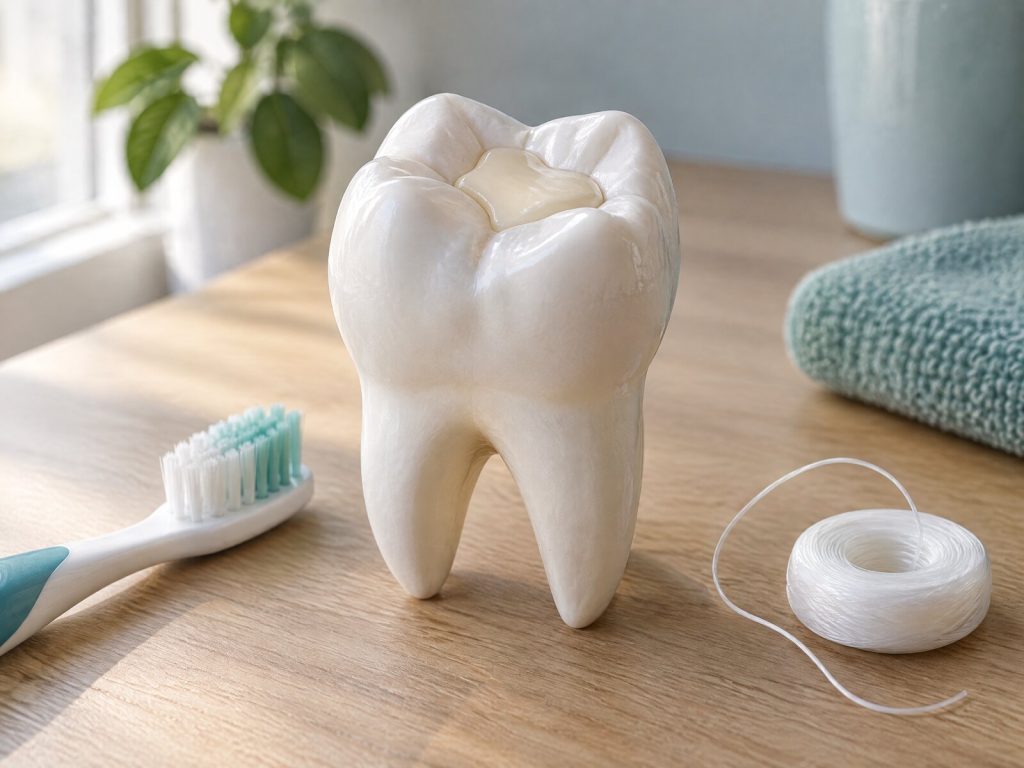
A filling rebuilds the part of a tooth that has been lost. The Australian Dental Association (ADA) says dental fillings are used to replace natural tooth that is fractured, broken or damaged by tooth decay. Once the damaged part is removed and replaced, the tooth can look and work properly again.
It is worth acting on, because decay tends to move inwards. healthdirect explains that if this early decay is not treated, it can become a cavity or hole, and that the decay or hole can get deeper into your tooth over time. It can cause a toothache or an abscess. The Better Health Channel adds a point that is easy to forget: an intact tooth is stronger than a filled one. That is why finding decay early, while the repair is small, matters.
- What causes the hole:
healthdirect says tooth decay is caused by plaque, a layer of bacteria that sticks on your teeth. The plaque bacteria change sugar that is in food and drinks into acid, and the acid slowly damages the tooth. - Who gets it:
Tooth decay can affect people of all ages, even very young children. - Other reasons for a filling:
Fillings are not only for decay. The ADA includes teeth that are fractured or broken too.
How Do I Know If I Need a Filling?
Often you cannot tell on your own. healthdirect says early tooth decay has no symptoms, and that sometimes a white spot on your tooth can be an early sign of decay. healthdirect also notes that when you have an x-ray, you may find out there is damage inside a tooth. That is one reason a regular dental check-up can pick up a problem before you feel it.
As decay goes further, these are the signs healthdirect and our own fillings page describe:
- Sensitivity:
It hurts when you have hot or cold food or drinks. Our fillings page also mentions sweet foods. - Stains or holes:
Brown, black or white stains on your tooth surface, or small holes or pits you can see. - Pain when you bite or chew:
Ongoing discomfort, especially when biting or chewing, could mean decay has progressed. - Toothache:
An ache in or around one tooth. - Gum changes:
Red and swollen gums near the decayed tooth. - Bad breath or a bad taste:
Persistent bad breath or a bad taste in the mouth may be linked to decay.
If you notice any of these signs, visiting a dentist can help prevent further complications. Dental Health Services WA lists facial swelling, dental pain and a lost filling among the problems that could be a dental emergency, so call promptly rather than waiting for your next check-up.
Can Early Decay Be Treated Without a Filling?
Sometimes it can. healthdirect says tooth decay that has not made a hole or cavity can be treated by a dental professional, who will put fluoride paste or varnish on your teeth. You also need to take preventive steps at home, such as brushing with a fluoride toothpaste and improving your diet, so the early decay does not become a hole.
The ADA explains what that looks like afterwards: you may not need a filling if the tooth decay process is stopped. However, a white or brown mark may remain on the tooth, like a scar from the early stages of decay. Whether a spot can be watched or needs a filling depends on what the dentist finds, so ask which applies to each tooth.
What Happens During a Filling Appointment at Ashburton Dental Centre?
Our tooth fillings in Gosnells page sets out the steps. Knowing them in advance takes some of the uncertainty out of the visit.
- Examination. The dentist assesses the affected tooth using a visual check and X-rays to determine the extent of the damage.
- Numbing. A local anaesthetic is applied to numb the affected tooth and surrounding gums.
- Removing the decay. The dentist carefully removes the decayed or damaged portion of the tooth.
- Cleaning. The cavity is cleaned to remove bacteria and prepare the tooth for the filling.
- Placing the filling. The dentist applies the chosen filling material in layers, shaping it to match the natural tooth structure.
- Hardening. A dental light is used to harden composite fillings.
- Adjusting. The filling is trimmed and polished to achieve a comfortable bite and natural feel.
- Final check. The dentist checks the fit and provides aftercare instructions.
The Better Health Channel describes the same core process: once all decay has been removed, the hole in the tooth is cleaned and dried, and then filled with a filling material. Some materials take longer. healthdirect says you will need 2 appointments to get a gold or porcelain filling, because these fillings are made in a dental laboratory to fit your tooth.
Will Getting a Filling Hurt?
It is a fair thing to worry about. Our fillings page explains that a local anaesthetic numbs the affected area before the procedure begins, and that patients may feel slight pressure or vibrations while the dentist removes decay and prepares the tooth for filling. The Better Health Channel says that, if needed, the dental practitioner will numb the tooth first with local anaesthetic to make sure you are comfortable throughout the process.
If you feel anxious about dental visits, tell us when you book. You can ask the dentist to explain each step before it starts, and you can ask questions at any point. Dr Kav Bhinder’s profile says he takes the time to understand each patient’s concerns.
Which Filling Material Will I Get?
There is no single right material for every tooth. The ADA says the choice is influenced by where the tooth is located in the mouth, how the teeth bite together and the size of the filling, and that the advice could be different for each tooth. Our fillings page adds that choosing the right filling material depends on factors like durability, aesthetics, cost, and the location of the cavity.
Here is what the Australian sources say about each option:
| Filling material | What the Australian sources say |
|---|---|
| Composite resin (tooth-coloured) | Glued (bonded) to the tooth and colour-matched. Because it is glued to the surface, the ADA says dentists don’t need to cut away as much tooth structure. Used in front and back teeth. |
| Glass-ionomer cement (tooth-coloured) | Not as strong as composite resin. Fluoride is an ingredient. Common uses include fissure sealants and temporary fillings. |
| Amalgam (silver) | Strong and can last a long time, but more tooth structure is cut away to hold it in place. The ADA says it is not commonly used these days, and some dentists do not use it at all. |
| Gold or porcelain | Made in a dental laboratory and glued into the tooth, often over at least two appointments. Very strong; porcelain can be colour-matched. |
| Temporary filling | Used when treatment takes more than one visit, in an emergency, or between root canal appointments. It is later replaced to complete your treatment. |
Worried about old silver fillings? healthdirect says that if you already have amalgam fillings you shouldn’t need to have them replaced, and your dental professional will tell you if there is a specific reason to do so. It also notes that if you are pregnant or breastfeeding or have kidney disease, your dental professional may choose a different material, and that amalgam is not commonly used in children.
What Should I Expect After a Filling?
A little sensitivity is common. healthdirect says that after a filling your tooth might feel more sensitive when you eat something sweet, eat something hot or cold, or bite your teeth together. The ADA calls this post-operative sensitivity and says it usually goes away after a few days. Sometimes, it can last 1 or 2 weeks.
| What you notice | What the sources suggest |
|---|---|
| Mild sensitivity to sweet, hot, cold or biting in the first few days | Common after a filling, and usually goes away after a few days (ADA). |
| Sensitivity that is not settling, or is getting worse | healthdirect: see your dental professional again if the tooth is still sensitive after a few days. ADA: return if the sensitivity does not go away or gets worse. |
| Pain that persists after the filling | Our fillings page recommends a follow-up visit for evaluation. |
| Part of the filling breaks off, or it falls out | See your oral health professional as soon as possible (Better Health Channel). |
| An older filling has chipped, worn or changed colour | Your dental professional will tell you if it needs replacing (healthdirect). A colour change alone does not mean it must be replaced (ADA). |
You might notice the two health sources put the timing a little differently. healthdirect suggests going back if the tooth is still sensitive after a few days, while the ADA says sensitivity can sometimes last 1 or 2 weeks. Both agree on the part that matters most: if it is not going away, or it is getting worse, have it checked. If you are not sure which applies to you, call us and we can look at the tooth.
How Long Do Fillings Last?
healthdirect is plain about it: dental fillings do not last forever. They can become chipped or worn or change colour over time. The ADA explains why. Using your teeth over time can cause the join between the tooth and the filling to open, which can let food and bacteria collect in that space and may cause tooth decay.
How long yours lasts depends on a few things. Our fillings page lists the type of material, your oral hygiene, bite pressure and the size and location of the filling, and notes that excessive grinding or chewing hard foods can wear down fillings faster. The Better Health Channel says all fillings need to be replaced eventually, and regular dental check-ups can help ensure fillings that are worn out due to chewing are found and fixed.
Your Checklist for Protecting Fillings and Teeth
The same habits that protect a new filling also protect the teeth around it. This checklist follows the ADA’s four steps and healthdirect’s advice:
- Brush twice a day:
Use a fluoride toothpaste. After brushing, spit out any leftover toothpaste and do not rinse your mouth with water, so a layer of toothpaste stays on your teeth. - Clean between your teeth every day:
Use dental floss or interdental brushes. - Keep added sugar low:
If you do have sugary food and drinks, have them with meals rather than sipping and snacking through the day. - Choose tap water:
Most Australian tap water has fluoride added, which helps protect and strengthen teeth. - Keep up regular check-ups:
They help find worn fillings and early decay before they cause trouble. - Ask about sealants for grooved teeth:
healthdirect says a sealant on the grooves of healthy teeth helps prevent decay in teeth with lots of grooves.
How Much Does a Filling Cost, and What Can Help?
Our fillings page explains that the cost of dental fillings depends on factors like the material used, the procedure’s complexity, and the tooth’s location. For an accurate figure for your tooth, ask the dentist to talk you through the cost and the material before treatment starts. These are the options that may help:
- Private health insurance:
Health funds may cover part of the cost of dental fillings, depending on the specific policy and provider. Our health fund page explains that we have an on-site HICAPS machine for on-the-spot claims, and that cover depends on your level of cover, annual limits and waiting periods. - Child Dental Benefits Schedule (CDBS):
Services Australia lists fillings among the services the CDBS covers. The cap is $1,158 over 2 consecutive calendar years, and the cap amount is indexed yearly on 1 January, so check the current amount. You don’t need to apply or register; if your child is eligible, Services Australia sends you a letter. See our CDBS page for how we can help check eligibility. - WA public dental care:
Dental Health Services’ General Dental Service includes fillings for Western Australians with a current health care card or pension concession card. Treatment is subsidised up to a maximum of 75% of the cost, based on your Centrelink income, and non-urgent care goes on a waiting list. If DHS has sent you a voucher for a private dentist, our guide to the MPDSS voucher explains what to check on it.
To help you compare, these are the questions worth asking at your appointment:
- Does this tooth need a filling now, or can we try to stop the early decay first?
- Which filling material do you suggest for this tooth, and why?
- Is this a temporary filling, and when will it be replaced?
- What will it cost, and what will my health fund, the CDBS or my public dental subsidy cover?
- What sensitivity is normal afterwards, and when should I call you?
What If a Filling Falls Out on the Weekend?
Don’t ignore it. The Better Health Channel says that if part of your filling breaks off or your whole filling falls out, see your oral health professional as soon as possible, and Dental Health Services lists a lost filling among the problems that could be a dental emergency. Ashburton Dental Centre is open on Saturdays and Sundays from 8:30 AM to 1:30 PM, so you can call us on the weekend too.
If you are a public dental patient, DHS asks you to telephone your local public dental clinic and make an appointment for urgent care, rather than turning up without one.
Frequently Asked Questions
Will I need an X-ray before a filling?
It depends on the tooth. Our fillings page says the dentist assesses the affected tooth using a visual check and X-rays to determine the extent of the damage, and healthdirect notes that your dentist may also do an x-ray when checking for decay.
Is a tooth-coloured filling as strong as a silver one?
Our fillings page notes that composite resin fillings have shorter lifespans than amalgam fillings. The ADA explains the trade-off: amalgam needs more tooth cut away to hold it in place, while composite is glued to the tooth, so less tooth structure is removed. Your dentist weighs these for the particular tooth.
My white filling has changed colour. Does it need replacing?
Not necessarily. The ADA says that as a white filling gets older it may no longer match your tooth, and this does not mean the filling needs to be replaced. If the colour bothers you on a front tooth, a dentist can replace the filling so it matches again.
Should I have my old amalgam fillings taken out?
healthdirect says you shouldn’t need to have them replaced, and your dental professional will tell you if there is a specific reason to do so.
Can my child’s fillings be covered?
If your child is eligible for the CDBS, fillings are among the covered services, up to the cap. Children and teenagers aged 5 to 16 attending school in WA are also eligible for the School Dental Service.
Final Thoughts
Knowing the steps can make a filling feel far less daunting. Early decay often has no symptoms, some early spots can be stopped without a filling, and the tooth is numbed before any work starts. Some sensitivity afterwards is common, but if it is not settling or is getting worse, come back so we can check it.
If you think you might need a filling, or one has chipped or fallen out, you are welcome to call Ashburton Dental Centre on (08) 9490-8777. You could say: “Hi, I think I might need a filling. One of my back teeth is sensitive to cold. Can I book a check?” Bring your health fund card, or your child’s Medicare card if you are using the CDBS, and your concession card if you have one. At your visit, the dentist examines the tooth, using X-rays where needed, and you can ask about the material and the cost before treatment starts. We are in the Ashburton Village Shopping Centre at 9/62 Ashburton Drive, Gosnells, next to Ashburton Primary School, open Monday to Friday 8:00 AM to 5:00 PM and Saturday and Sunday 8:30 AM to 1:30 PM. You can also contact us online.
Author Name: Dr Kav Bhinder, General Dentist, Ashburton Dental Centre
Sources (checked 29 October 2026):
- healthdirect: Dental fillings (last reviewed February 2025)
- healthdirect: Tooth decay (last reviewed February 2025)
- Australian Dental Association (teeth.org.au): Fillings
- Australian Dental Association (teeth.org.au): Tooth decay
- Better Health Channel, Victorian Government: Dental fillings (reviewed 1 August 2025)
- Services Australia: Child Dental Benefits Schedule features
- Services Australia: Who can get the Child Dental Benefits Schedule
- Dental Health Services, Government of Western Australia: General Dental Service
- Dental Health Services: Emergency?
This article is general information based on the published sources above, not personal advice. Your dentist will advise on your own teeth, and scheme rules and caps can change. Photos in this article are AI-generated illustrations, not photos of Ashburton Dental Centre, its staff or patients.