Top image: AI-generated illustration.
Your dentures used to feel familiar, but since starting a medicine your mouth feels sticky and eating takes more effort. It is understandable to wonder whether the medicine, the denture fit or something else has changed.
Some medicines can cause dry mouth, and reduced saliva can make acrylic dentures feel loose. Do not stop or change a medicine yourself; speak with your doctor. Ashburton Dental Centre in Gosnells offers denture care and dental check-ups, so you can arrange an assessment of your mouth and denture concerns.
Summary of the Content:
- A new dry feeling is worth discussing with your doctor and dentist; timing alone does not identify the cause.
- Saliva helps acrylic dentures stay in place and helps protect any remaining natural teeth.
- A medicine review and a denture assessment answer different questions. You may need both.
- Water, moist foods and suitable dry-mouth products may help with discomfort, but they do not replace assessment.
- Bring a medicine list and a short record of your symptoms, including whether eating, speaking or denture stability has changed.
Could my new medicine be making my mouth dry?
It could, but timing alone does not identify the cause. The Victorian Government’s Better Health Channel dry-mouth guidance describes medicines, medical conditions, dehydration and mouth breathing as possible contributors. Tell your doctor when the dryness began and what else changed around that time.
A dry mouth is a symptom that needs an explanation, rather than a diagnosis you can make from the calendar. Better Health Channel describes a review of symptoms, medical history and the mouth and teeth when investigating it. Keep a note of the sequence, but leave the assessment of the cause to your health professionals.
Do not test the connection by skipping a dose. Better Health Channel, in its dry-mouth factsheet reviewed on 9 September 2025, states: “Do not stop taking your medicine without speaking to your doctor.” Its treatment information explains that any dose change or alternative medicine is a decision for the prescribing doctor.
Why do my dentures feel different when my mouth is dry?
Less saliva can affect denture stability as well as comfort. The Victorian Government’s Better Health Channel dry mouth factsheet, reviewed on 9 September 2025, explains that saliva helps create suction between the gum tissues and the acrylic base of a denture. It lists loose acrylic dentures among the symptoms of dry mouth.
That does not mean every loose denture is caused by dryness. Ashburton Dental Centre’s denture guidance explains that gums and jawbone can change shape over time, affecting fit. It describes adjustments, relining and replacement as possibilities depending on the problem. A change after starting medicine is a reason to describe the sequence, not a reason to choose a new denture yourself.
Be specific about what feels different. Does your upper denture move when you talk? Is eating dry food harder? Does your tongue feel sticky even with the dentures out? Better Health Channel lists problems with chewing or swallowing, thick saliva and a tongue that sticks among dry-mouth symptoms. These details are useful to discuss rather than simply saying the dentures are “not right”.
Should I speak with my doctor or my dentist first?
Speak with your doctor about the medicine and with your dentist about your mouth and dentures. Better Health Channel describes reviewing medicines, medical history and symptoms alongside examination of the mouth and teeth. A medicine review and a denture assessment have different purposes, even when the concerns began together.
| What you want to understand | What to discuss |
|---|---|
| Whether a medicine contributes to dryness | Ask your doctor to review the medicine list and the timing of symptoms. Keep taking medicines as directed unless your doctor advises a change. |
| Why an acrylic denture feels loose | Ask your dentist to assess the denture and mouth. Dryness and changes in mouth shape are both relevant possibilities. |
| How to protect remaining teeth | Ask your dentist about a cleaning and fluoride plan suited to your dry mouth and natural teeth. |
| Which dry-mouth product to use | Ask your dentist for a recommendation rather than assuming every rinse, gel or spray suits you. |
This comparison brings together Better Health Channel’s medicine and assessment guidance and the clinic’s denture information. Treatment depends on what is causing the dryness. Tell both professionals about the medicine change and the denture problem rather than assuming one appointment replaces the other.
What can I do about eating and everyday discomfort?
Ask about measures that keep your mouth and food moist while you arrange advice. Better Health Channel recommends watery foods and water, and limiting sugary or acidic drinks. If dry or crunchy foods are difficult or uncomfortable, describe that when you seek advice; its guidance notes that crunchy foods can injure a dry mouth.
If water helps only briefly, ask about products intended to moisten a dry mouth. Better Health Channel describes lubricating products such as gels, mouthwashes and toothpastes, as well as saliva substitutes. Ask your dentist which product suits you. Moistening the mouth is different from establishing why it became dry.
Better Health Channel includes sugar-free gum as a way to encourage saliva flow. If chewing is uncomfortable or awkward with your dentures, ask your dentist about another option instead of trying to force it. Bring the name of any product you already use so the discussion is specific to your daily routine.
Avoid making sugary lollies or sweet drinks your routine response to dryness. Better Health Channel explains that reduced saliva increases tooth-decay risk and advises avoiding sugary foods and drinks. Its guidance also notes that spicy foods and alcohol-containing mouthwashes can aggravate a dry mouth. Tell your dentist what irritates your mouth and ask what alternatives suit you.
Does it matter whether I have full or partial dentures?
Yes. A partial denture replaces some missing teeth, so care of the remaining natural teeth still matters. The clinic’s partial-denture page describes cleaning the gums, tongue and palate and paying attention to natural teeth near denture clasps. People with full dentures still need assessment of their appliance and mouth tissues; the clinic’s denture page describes these checks.
With natural teeth, dry-mouth care includes brushing and cleaning between teeth. Better Health Channel recommends fluoride toothpaste, twice-daily brushing and daily flossing or interdental cleaning. It explains that review frequency may need to change when decay risk is higher. Ask which fluoride product and check-up interval fit your situation rather than choosing a stronger product or fixed schedule yourself.
Your denture needs its own cleaning routine. Our denture service page describes a soft brush and non-abrasive denture cleaner, rinsing after meals and careful handling. It warns against hot water because this can distort a denture. Ask which cleaner and method suit your appliance, particularly if it includes metal.
Ashburton Dental Centre also provides removable partial dentures. When booking, tell us whether you have full or partial dentures and which natural teeth remain. That helps you describe the care you are seeking without assuming you need a new appliance.
What should I do about my dentures at night?
Take removable dentures out while you sleep, as Better Health Channel and our denture page advise. Our existing article on sleeping with dentures covers overnight wear in more detail. Keep cleaning and overnight removal as part of the conversation about your dry mouth.
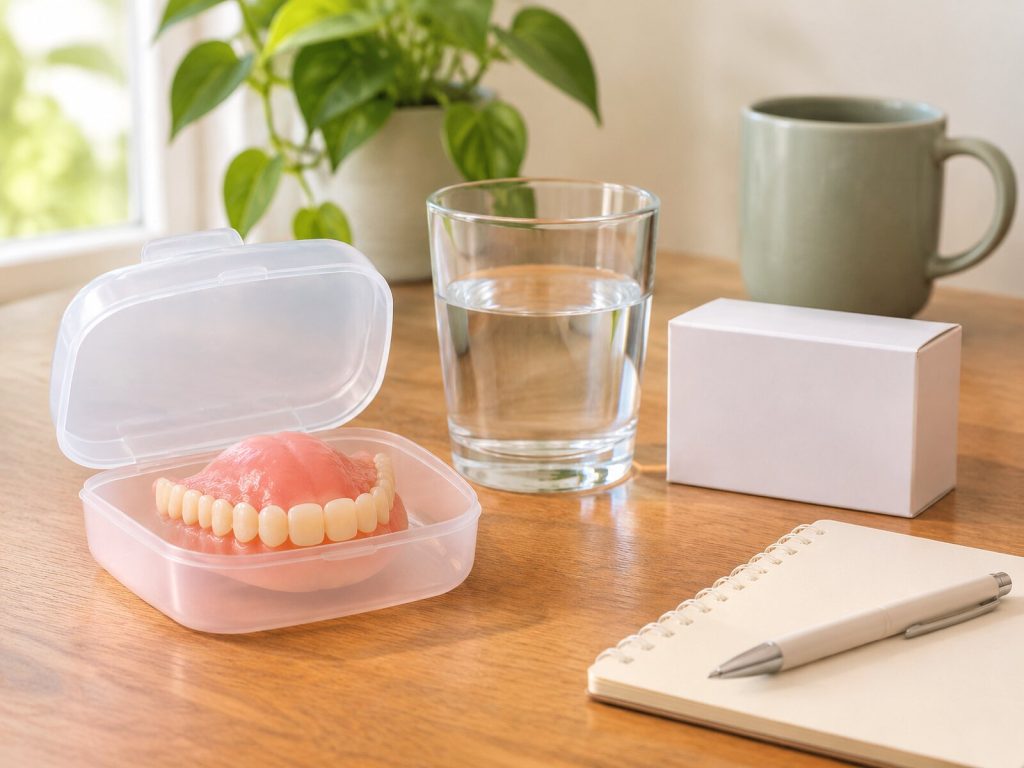
Ask about storage separately from removal. Our denture page describes overnight soaking in water or a mild solution, but the cleaner and appliance instructions still need to fit the denture you own. Bring the product name and ask the dentist to explain the routine to follow. Do not substitute hot water; the clinic warns that heat can distort the appliance.
If nights are especially uncomfortable, mention that pattern too. Better Health Channel includes a bedroom humidifier among possible comfort measures. Dryness that affects sleep is still worth discussing with your doctor; a different night-time routine is not a substitute for investigating the cause.
What should I bring to an appointment?
Bring a current medicine list and notes about your symptoms. Better Health Channel includes reviews of medical history, medicines and symptoms in dry-mouth assessment. Tell your dentist about the products you use for your mouth and dentures too. The checklist below helps organise that conversation; it is not a diagnostic test.
- Write down your medicines, vitamins and supplements, including anything bought without a prescription.
- Note when the new medicine began and when you first noticed dryness. Include any recent dose change to discuss with your doctor.
- Describe when symptoms are most noticeable: on waking, during meals, at night or throughout the day.
- List changes in eating, swallowing, speaking or denture movement, and any soreness or burning.
- Bring the names of your denture cleaner, adhesive, toothpaste and dry-mouth products, so you can ask whether they suit your appliance and mouth.
- Write down your main question: “Could we check both my dry mouth and the fit of my dentures, rather than assuming one explains the other?”
Contact your doctor or dentist about troublesome dryness rather than assuming you must wait for a scheduled check-up. Better Health Channel lists mouth ulcers, burning and susceptibility to oral thrush among dry-mouth concerns. A sore mouth needs assessment, not an assumption that it is just a medicine side effect.
What can I expect at Ashburton Dental Centre?
Our dental check-up page describes oral examination, professional cleaning and fluoride treatment, with X-rays where needed. Tell us about the dryness and dentures when you book so you can ask what assessment is appropriate.
You can ask the dentist what they found, whether your denture needs attention, what home-care products to use and when to return. A medicine change remains a discussion with your doctor. The aim of the appointment is to assess your concerns and discuss the next steps, rather than decide in advance that a denture needs replacing.
Final Thoughts
You do not have to work out the cause on your own. Keep taking medicines as directed, tell your doctor about bothersome dryness, and have changes in your mouth or denture fit assessed. Better Health Channel recommends medical and dental guidance to investigate dryness and choose appropriate care.
To arrange a visit, call Ashburton Dental Centre on (08) 9490-8777 or contact our Gosnells team. You could say: “My mouth has felt dry since starting a medicine, and my dentures feel different. Can I book a check and bring my medicine list?”
We are at 9/62 Ashburton Drive, Gosnells, in Ashburton Village Shopping Centre next to Ashburton Primary School. Our published hours are Monday to Friday, 8:00 AM–5:00 PM, and Saturday and Sunday, 8:30 AM–1:30 PM. Ask reception about an available appointment time.
Author Name: Dr Kav Bhinder, General Dentist, Ashburton Dental Centre
Sources (checked 2 November 2026):
- Better Health Channel, Victorian Government: Dry mouth — reviewed 9 September 2025; acrylic-denture suction, assessment and management. Reference: www.betterhealth.vic.gov.au.
- Ashburton Dental Centre’s denture, partial-denture, check-up, contact and dentist-profile pages linked above — clinic services, author attribution and attendance details.
Photos in this article are AI-generated illustrations, not photos of Ashburton Dental Centre, its staff or patients.
This article provides general information from published guidance, not personal medical or dental advice.