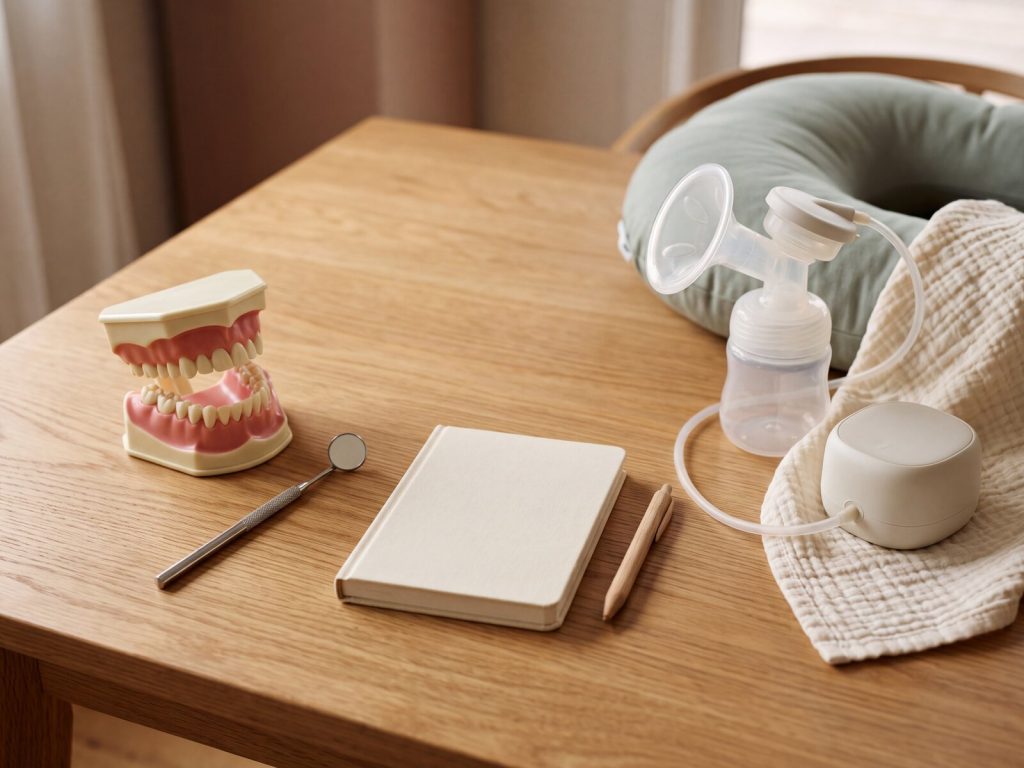
Top image: AI-generated illustration.
You have finally found a gap between feeds, but now you are wondering about the numbing injection, an X-ray or medicine after a filling. You do not need to work out every answer before calling the dentist.
Breastfeeding does not usually mean putting dental care on hold. Australian guidance supports routine checks, dental X-rays and treatment with local anaesthetic while breastfeeding. Tell the dentist you are feeding and ask about any medicines separately. Ashburton Dental Centre offers check-ups and fillings in Gosnells; the appointment should reflect your needs, not a generic online timetable.
Our dental check-up information describes a tooth and gum examination, imaging if needed and advice for your own mouth. If a tooth needs repair, our filling information explains a separate treatment pathway. Booking a check does not mean you have already agreed to a filling.
Summary of the Content:
- Tell the team that you are breastfeeding when you book and again when your medical history is checked.
- Ask whether your appointment involves local numbing alone or a different anaesthetic plan.
- Have any take-home medicine checked for you and your baby; do not assume every product suits everyone.
- Ask about the length and purpose of your actual appointment before arranging help with feeds.
- Bring a current medicine list and explain any concerns about your baby’s health.
Can I have a check-up, clean or filling while breastfeeding?
Routine dental care can generally continue while breastfeeding. MotherSafe, the NSW Health medicines-in-pregnancy and breastfeeding service, includes routine check-ups, X-rays and procedures with local anaesthetic in its breastfeeding guidance. That answers the broad question; the dentist still needs to assess the particular tooth and treatment.
If your worry is a filling, start with an assessment rather than assuming you need treatment. Ashburton’s published filling process begins with checking the tooth and may involve X-rays. It describes numbing the area before decay is removed, placing the filling, checking the bite and giving aftercare instructions. The details depend on what the examination finds.
Our existing guide to what happens before, during and after a filling in Gosnells covers that treatment in more detail. This article focuses on the feeding and appointment questions that sit alongside it. Tell us which part worries you, even if it feels like a small question.
Does the numbing injection mean I need to stop feeding?
A local anaesthetic injection is not, by itself, a usual reason to interrupt breastfeeding. The Australian Dental Association’s pregnancy and breastfeeding information supports dental local anaesthetic during breastfeeding. Local numbing is different from being sedated or put to sleep; check which is actually proposed for you.
The Women and Newborn Health Service’s 2023 anaesthesia leaflet includes a dental extraction example involving local anaesthetic and a six-month-old infant. It explains that feeding can continue after that procedure because only small amounts enter milk for a short time. This is useful general context, not an individual instruction for every medicine combination or infant.
Ask the dentist to name the type of anaesthetic in your plan. If you have read instructions about a major operation, do not assume those instructions describe a filling with local numbing. If there is also sedation, another medicine or a baby with additional health needs, ask for advice covering those details rather than relying on the word “anaesthetic” alone.
How is sedation different from a local injection?
Sedation changes how awake or sleepy you are; local anaesthetic numbs an area. WA’s anaesthesia leaflet treats these separately and says that, after sedation or general anaesthesia, a person can generally feed once awake and well enough to hold their infant. It also discusses having someone available to help care for the baby.
This does not establish that Ashburton provides any particular sedation service. If sedation is being discussed, confirm who would provide it, where it would happen and whose instructions to follow. Ask the treating team about feeding, supervision, transport and when you can look after your baby. Do not use a routine check-up booking as evidence that those arrangements have been made.
The WA leaflet also gives extra consideration to a premature baby in neonatal care and directs the parent to the baby’s doctors. Tell your treating team if your baby was premature, is unwell or has a medical condition. General adult appointment advice cannot answer all of those circumstances.
What about pain relief or antibiotics afterwards?
Any take-home medicine needs its own check. HealthyWA’s medicines and breastfeeding guidance explains that decisions balance the medicine’s benefit for the parent with possible effects on the infant. It asks people to tell the pharmacist they are breastfeeding and check the ingredients in a medicine.
Tell the dentist and pharmacist what you already take, including non-prescription products and supplements. The ADA explains that a current medical history includes breastfeeding, allergies, medicines and the doctors caring for you. A medicine list is more useful than trying to recall a packet’s colour while you are in the chair.
Ask what the medicine is for, how to use it and what to do if you or your baby have a problem. HealthyWA lists unusual sleepiness, poor feeding, rash and severe diarrhoea as possible infant effects to discuss with a doctor if troublesome or persistent. The WA anaesthesia leaflet says to get medical attention straight away if the infant has difficulty breathing.
You may find that an older leaflet and a newer resource describe a medicine differently. The 2020 MotherSafe leaflet and HealthyWA’s 2021 page differ in some pain-medicine wording. That is a reason to ask a pharmacist or prescriber for current advice, not to pick a dose from whichever page looks reassuring. This article does not recommend a drug, dose or change to a prescription.
A note to bring, rather than a medicine timetable
Use the following as a place to organise your own questions. It does not tell you when to feed, express milk or take a dose. Your clinician or pharmacist needs to answer those questions for the actual treatment.
| Bring or explain | What to ask |
|---|---|
| Your dental concern | Is this a check-up, a tooth assessment or a treatment appointment? |
| Your feeding situation | Does the proposed plan need any specific feeding arrangements? |
| Your baby’s health | Should advice involve the doctor caring for my baby? |
| Current medicines and allergies | Who will check a new medicine against what I already take? |
| Help and travel arrangements | How long should I allow, and does this plan require another adult? |
How can I plan a visit around feeds?
Ask about your actual booking rather than assuming every appointment takes the same time. Ashburton’s check-up page gives a general range of 30–60 minutes depending on oral-health needs and notes that imaging can affect duration. That is a planning guide, not a promised finish time or the duration of a separate filling.
When calling, explain whether you need help fitting the visit around feeding or a support person. Ask whether there is anything the team needs to know before booking, and confirm arrangements if you want to bring your baby. Do not assume childcare, space for a pram or baby attendance has been arranged unless the team confirms it.
- Describe the tooth problem or the check-up you want to arrange, and say you are breastfeeding.
- Ask what type of appointment to book and how long to allow for that visit.
- Bring your current medicine list, relevant medical information and any existing treatment instructions.
- Before treatment, ask about the proposed numbing or anaesthetic plan and any separate medicine advice.
- Before leaving, check who to call about dental aftercare and who can answer feeding or medicine questions.
For an additional medicine question, WA’s published information identifies the Pregnancy and Breastfeeding Medicines Information Service at the Women and Newborn Health Service on (08) 6458 2723. It is an information service, not a dental booking line; confirm current availability when you call.
Booking at Ashburton Dental Centre
Call (08) 9490 8777 or use our contact page. We are at 9/62 Ashburton Drive, Gosnells, in Ashburton Village Shopping Centre next to Ashburton Primary School. You can say: “I’m breastfeeding and want a tooth checked. Could we discuss the appointment length and any numbing or medicine questions before treatment?”
The clinic’s profile for Dr Kav Bhinder identifies him as a general dentist. Bring your questions even if you are unsure which treatment you need. An assessment and a conversation about the proposed care come before deciding what to do.
By Dr Kav Bhinder, Ashburton Dental Centre.
Sources
Sources checked 3 November 2026. General published guidance and clinic information, not personal dental or medicine advice. Source dates matter: older medicine lists are not used here as prescribing instructions.
- MotherSafe, NSW Health: Dental Treatment in Pregnancy and Breastfeeding (November 2020), breastfeeding subsection only.
- Women and Newborn Health Service WA: Anaesthesia and breastfeeding (2023), distinctions between local numbing, sedation and individual planning.
- HealthyWA: Medications and breastfeeding (reviewed 18 March 2021), individual medicine checks and information-service details.
- ADA: Pregnancy and ADA: Medical history, used to independently verify clinical facts; no artwork or education framework reproduced.
- Ashburton Dental Centre: check-ups, fillings, Dr Kav Bhinder and contact information.
Photos in this article are AI-generated illustrations, not photos of Ashburton Dental Centre, its staff or patients.